One root.
Many agents.
Pando is a free, open‑source, multimodal AI coding agent. On the surface you see one assistant. Beneath it, a living network of memory, subagents and tools grows as a single organism.
Latest release · macOS · Linux · WindowsFour ways into the same organism.
Desktop, Web, Terminal or a single command line. Every surface is a trunk of the same grove: your sessions, memory and agents follow you from one to the next.
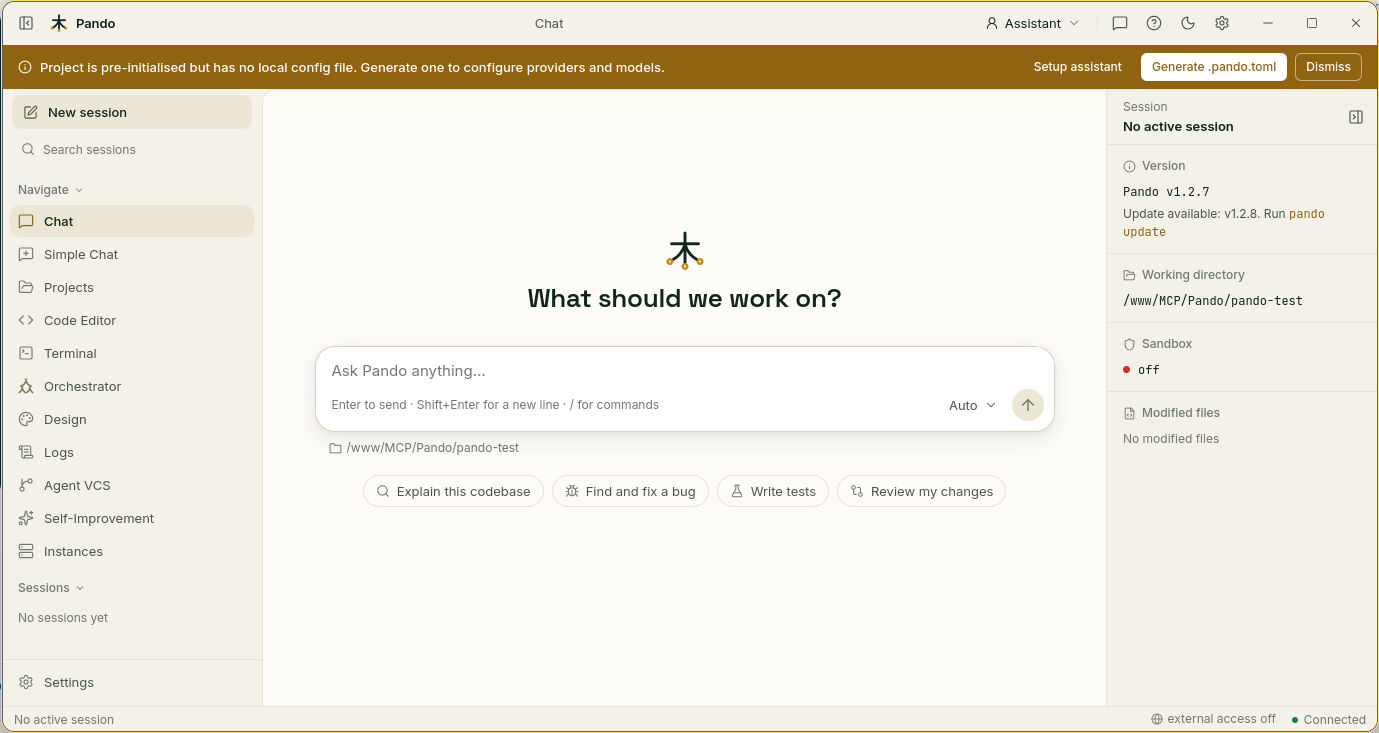
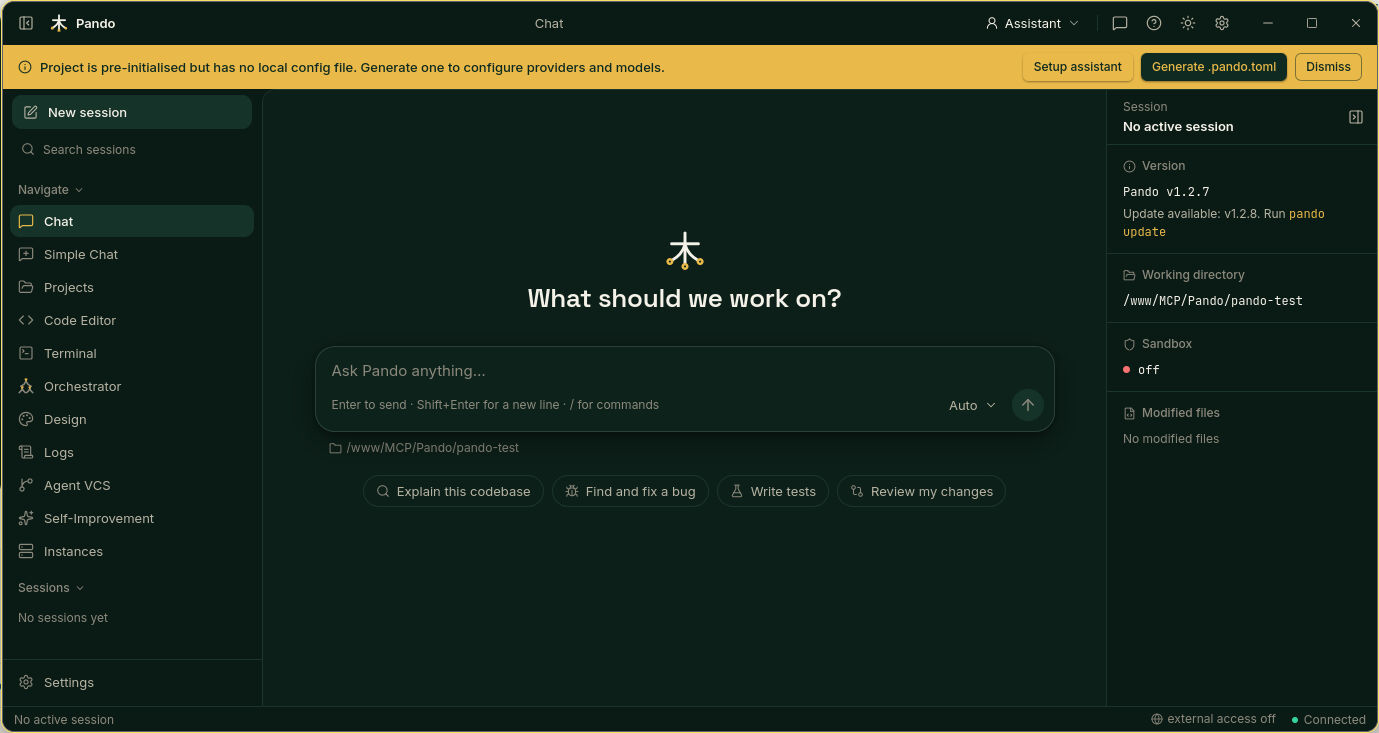
What matters happens below.
A Pando grove looks like a forest of thousands of trees. It is one organism, joined at the root. Every session works the same way: an agent, a memory and a retinue of subagents, connected beneath what you see.
The agent core. Personas with automatic agent selection, tools discovered on demand and reasoning effort under your control.
Persistent memory with semantic search and RAG, plus tree‑sitter AST indexing. Context arrives before you ask for it.
Coordinates subagents — Pando’s own and other major agents — delegating work in parallel and gathering it back.
- 01 · 表 You ask From Desktop, Web, TUI or CLI.
- 02 · 木 Pando reads the goal Picks persona, tools and effort.
- 03 · 本 Remembrances recalls Code index, past sessions, knowledge.
- 04 · 众 Mesnada delegates Subagents work in parallel.
- 05 · 表 The result surfaces And the grove remembers it.
The ecosystem it grows from.
Models, protocols, tools and safeguards. Pando draws from whatever soil you plant it in — written in Go, extensible in Lua, isolated when you need it.